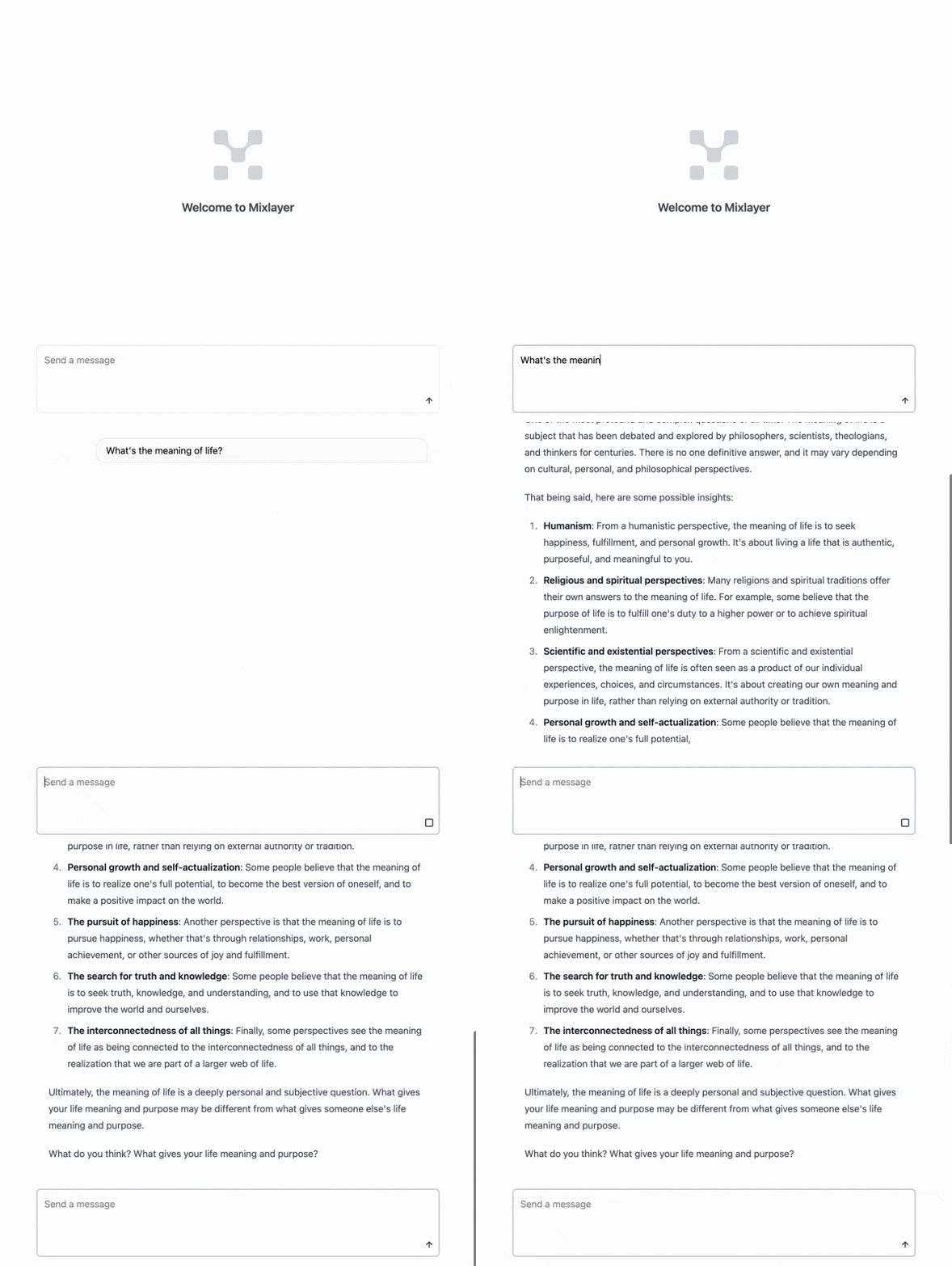

mixlayer-react-chat is a simple React component that provides a ready-to-use, simple chat interface. It handles message display, user input, and communication with a Server-Sent Events (SSE) chat API.
✅ Response streaming
✅ Markdown rendering
✅ Stream cancellation
✅ Autoscrolling
✅ Auto-resizing input box
✅ Turn deletion & regeneration
- Add the dependency to your project.
$ npm install @mixlayer/react-chat- Insert the
MixlayerChatcomponent into your React component tree. You need to provide the URL for your chat backend.
import { MixlayerChat } from "@mixlayer/react-chat";
import "@mixlayer/react-chat/dist/style.css";

function App() {
  return (
    <div style={{ height: "500px", width: "400px", border: "1px solid #ccc" }}>
      <MixlayerChat url="/chat" emptyState={<div>Start chatting!</div>} />
    </div>
  );
}

export default App;url: (Required) The URL of your backend chat endpoint.emptyState: (Optional) A React node to display when the chat is empty.className: (Optional) Additional CSS classes for the main chat container.
The backend endpoint should implement Server-Sent Events (SSE) to stream chat responses.
mixlayer-react-chat will submit a request with a body in the following format:
{
  "params": {
    "messages": [
      {
        "role": "user",
        "text": "The content of the user's message."
      },
      {
        "role": "assistant",
        "text": "The content of a previous assistant message (if any)."
      }
      // ... additional messages in the conversation history
    ]
  }
}When mixlayer-react-chat connects to the provided URL, it expects a stream of JSON objects in the data field of each event.
Text Frame
{
  "type": "text",
  "text": "The text chunk being streamed"
}
Error Frame
{
  "type": "error",
  "error": "Description of the error"
}
Done Frame Signals the end of the stream for a chat turn.
{
  "done": true
}Here's an example backend using Hono and Mixlayer.
import { Hono } from "hono";
import { stream, streamSSE } from "hono/streaming";
import { user, assistant, open } from "@mixlayer/llm";

interface ChatRequest {
  params: {
    messages: {
      role: "user" | "assistant";
      text: string;
    }[];
  };
}

app.post("/chat", async (c) => {
  const body = await c.req.json<ChatRequest>();

  return streamSSE(c, async (stream) => {
    const seq = await open();

    for (const message of body.params.messages) {
      await seq.append(message.text, { role: message.role });
    }

    const response = await assistant(seq)
      .gen({ temperature: 0.8 })
      .textStream();
    let reader = response.getReader();

    while (true) {
      const { done, value } = await reader.read();

      if (done) {
        break;
      }

      await stream.writeSSE({
        data: JSON.stringify({ text: value }),
      });
    }

    await stream.writeSSE({
      data: JSON.stringify({ done: true }),
    });
  });
});